UAE has a tropical desert climate with two distinct seasons: the hot season (summer) from May to October, characterized by hot and humid weather with temperatures exceeding 40°C, reaching over 45°C during the day in coastal areas, and humidity around 90%; and the cool season (winter) from November to April, with mild, sunny weather, occasional rainfall, and temperatures generally between 15°C and 35°C. The average annual rainfall is approximately 100 mm, mostly concentrated in January and February. The eastern mountainous regions are cooler and drier.
Bus air conditioner plays a crucial role in providing passengers with a comfortable and pleasant travel experience, especially during the hot summer months.
As a bus operator or user, understanding the functions, advantages, and precautions of bus air conditioning is essential for making informed fleet decisions.
Since 1982, we specialize in crafting European-quality buses using high-performance steel and aluminum, akin to materials found in aircraft and heavy trucks. UAE Bus Air Conditioners are an important component of HAFILAT industry buses.
"BUSCLIMA can be sourced from bus air conditioner suppliers and manufacturers in China," said an engineer from HAFILAT.
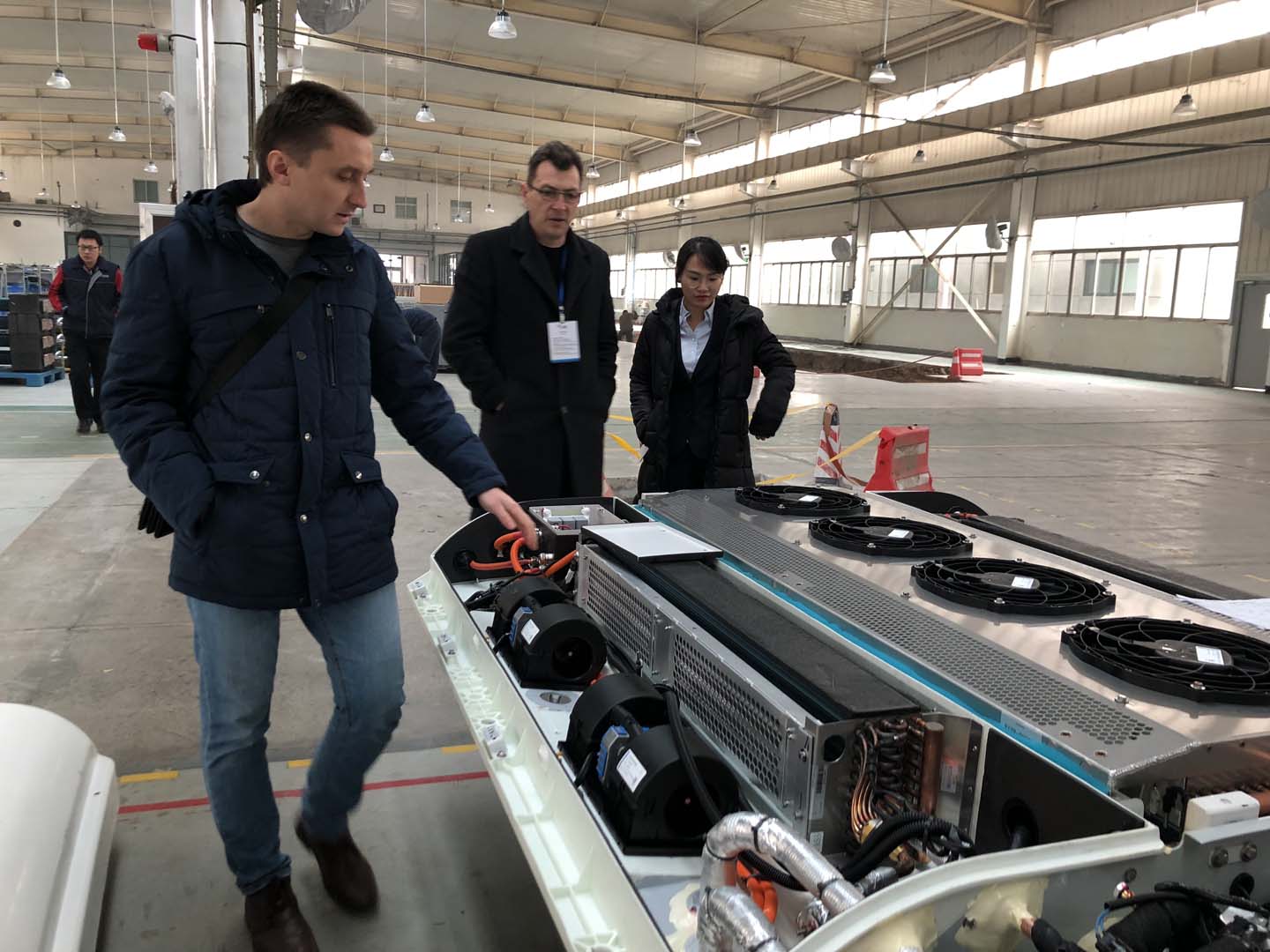
HAFILAT is contacting busclima@kingclima.com for bus air conditioner suppliers in China to obtain the best service and solutions in UAE. UAE Bus Air Conditioner consists of a compressor, condenser, receiver-drier, expansion valve, evaporator, and refrigerant.
1.The compressor is the "heart" of the air conditioning system, compressing the low-temperature, low-pressure gaseous refrigerant into a high-temperature, high-pressure refrigerant, thus achieving the transformation of the refrigerant from a gaseous to a liquid state.
2.The condenser cools and condenses the high-temperature, high-pressure refrigerant vapor discharged from the compressor into a high-pressure refrigerant liquid. There are three main types: tubular, tube-fin, and finned.
3.The receiver-drier has the functions of storing liquid and drying it, replenishing space for leaked refrigerant, and filtering impurities and moisture.
4.The expansion valve, also known as a throttling valve, is the dividing point between high and low pressure in the refrigeration system. It throttles and reduces pressure, regulating the amount of liquid refrigerant entering the evaporator, preventing liquid 5.hammer in the compressor and abnormal overheating of the vapor at the evaporator outlet.
6.The evaporator allows low-temperature, low-pressure liquid refrigerant to absorb heat from the surrounding air, boiling and vaporizing, thus lowering the surface temperature of the evaporator and the air temperature, turning it into cool air that is then delivered into the vehicle.
7.Pipes connect the various components, ensuring the proper functioning of the car's air conditioning system.
8.The refrigerant removes heat from the vehicle's interior through its own physical changes.
9.Car air conditioning also includes a ventilation system that ensures ventilation while the car is in motion, introducing fresh air and expelling harmful gases; it also heats fresh air in winter.
10.The heating system heats fresh air entering the vehicle, both inside and outside, achieving heating and dehumidification.
11.The air purification system filters the incoming air, keeping the interior air clean.
12.The control system, composed of electrical components, vacuum lines, and operating mechanisms, controls the temperature and pressure of the cooling and heating systems, manipulating the temperature, airflow, and direction of the air inside the vehicle to optimize air conditioning functionality.
13.Car air conditioning systems consist of high-pressure and low-pressure lines. The high-pressure side includes the compressor output, while the low-pressure side includes the evaporator.
UAE Bus Air Conditioner operates as follows:
1. The refrigerant evaporates upon encountering a low-pressure environment, absorbing a large amount of heat. The low-pressure gaseous refrigerant from the evaporator flows through the compressor, becoming a high-temperature, high-pressure liquid.
2. The high-temperature, high-pressure liquid is cooled by the condenser's heat dissipation pipes, becoming a high-pressure, low-temperature liquid.
3. It then passes through the receiver-drier for dehumidification and buffering, and flows at a more stable pressure and flow rate to the expansion valve. After throttling and pressure reduction, it finally flows to the evaporator.
4. Air continuously flows through the evaporator inside the bus, thus lowering the temperature inside the bus. The liquid refrigerant, after passing through the evaporator, becomes a low-pressure gas again and is drawn back into the compressor for the next cycle.
In the entire system, the expansion valve controls the amount of refrigerant entering the evaporator. Too much refrigerant entering the evaporator makes evaporation difficult, while too little results in insufficient cooling. Therefore, the expansion valve is the central regulating valve, while the compressor is the heart of the system and the power source for the system's circulation.