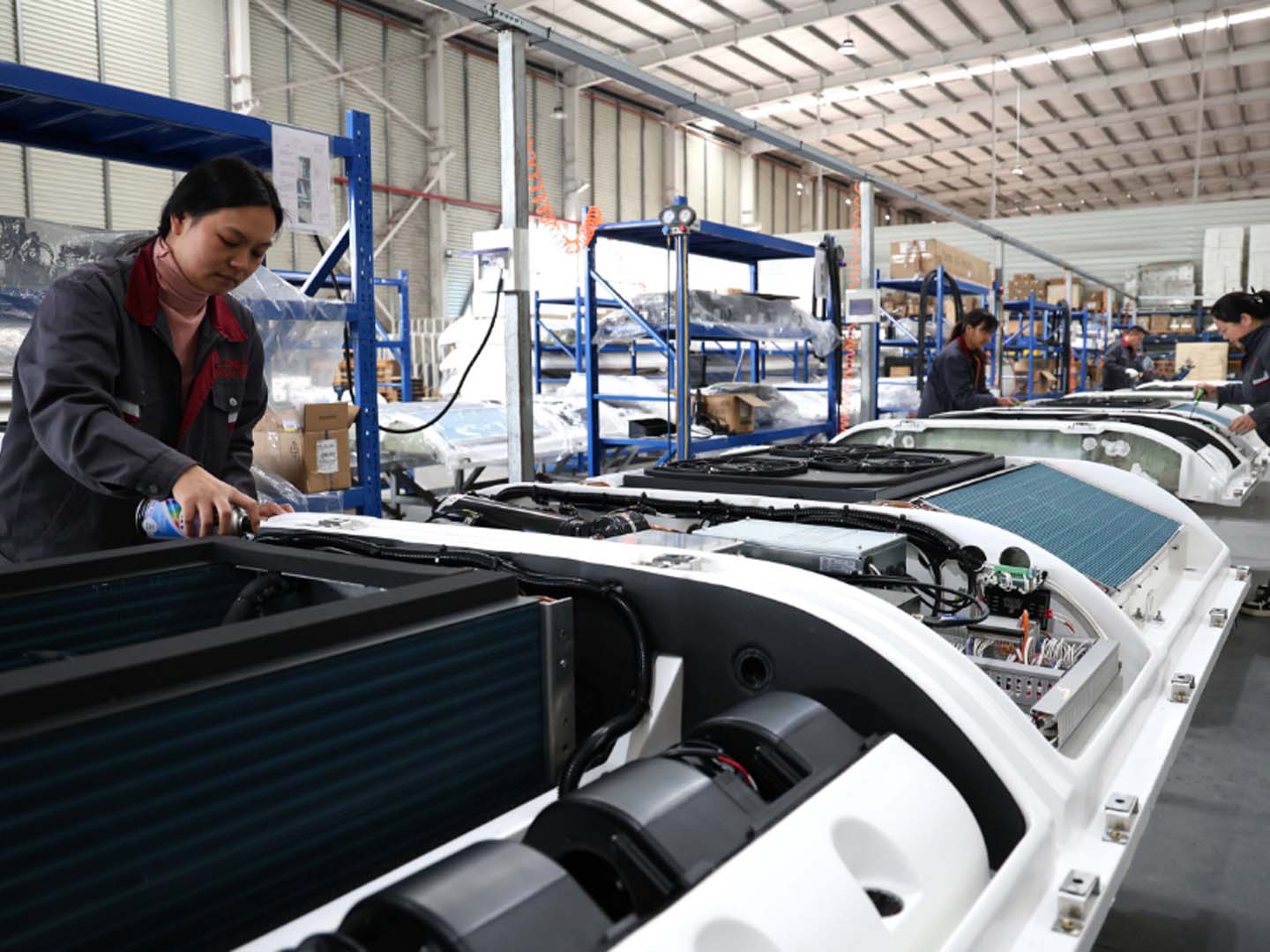
SNVI Company Bus Air Conditioner is an engineering marvel, designed to maintain a constant temperature throughout the large passenger space while minimizing energy consumption.
Unlike home air conditioners that only cool, bus air conditioning systems must address unique challenges: rapid temperature fluctuations when doors open and close, changes in passenger numbers, and the need to distribute airflow evenly throughout the cabin.
Most systems use a split design, with the compressor mounted on the roof or floor and connected to an evaporator that circulates cool air through overhead ducts.
Advanced models use variable-speed compressors that adjust cooling capacity according to demand, reducing energy consumption by up to 30% compared to fixed-speed systems. What truly sets high-end bus air conditioning systems apart is the BusClima intelligent climate control.
Sensors throughout the cabin monitor temperature changes, sunlight intensity, and passenger density, automatically adjusting airflow and cooling power to maintain the temperature within ±1°C of the set temperature.
Some systems even feature zone control, allowing the driver to set different temperatures for the front, middle, and rear rows—perfectly addressing "hot spots" near windows or "cold spots" near doors.
This precise control ensures the same level of comfort throughout the journey, whether you're seated by the window or in the aisle.
SNVI Company Bus Air Conditioner works by passing interior air through an evaporator and then blowing it into the passenger compartment via ducts to achieve cooling. Therefore, the unit's primary function is cooling.
The specific workflow is as follows:
The compressor compresses the low-temperature, low-pressure refrigerant into a high-temperature, high-pressure refrigerant. The refrigerant is then cooled and converted into a high-pressure liquid refrigerant in the condenser.
Then, it is throttled through an expansion valve, causing the high-pressure refrigerant to become a low-temperature, low-pressure refrigerant as it passes through the evaporator.
Finally, it is blown into the passenger compartment through ducts, providing cool air, and this process is continuously repeated.
Beyond Cooling: The Multiple Benefits of a Superior Bus Air Conditioner
Temperature control is the most obvious function, but modern Algeria bus air conditioning systems offer a range of benefits, enhancing passenger experience and operational efficiency. Air filtration is a key feature; High-Efficiency Particulate Air (HEPA) filters effectively filter dust, pollen, and even bacteria, improving in-vehicle air quality—a feature particularly important during the COVID-19 pandemic. For buses operating in heavily polluted urban environments, activated carbon filters can further reduce harmful gases and odors, creating a healthier environment for passengers and drivers.
SNVI Bus engineers stated that their bus air conditioner supplier, BUSCLIMA, is located in China.
SNVI Group is contacting busclima@kingclima.com for bus air conditioner suppliers in China to obtain the best service and solutions.